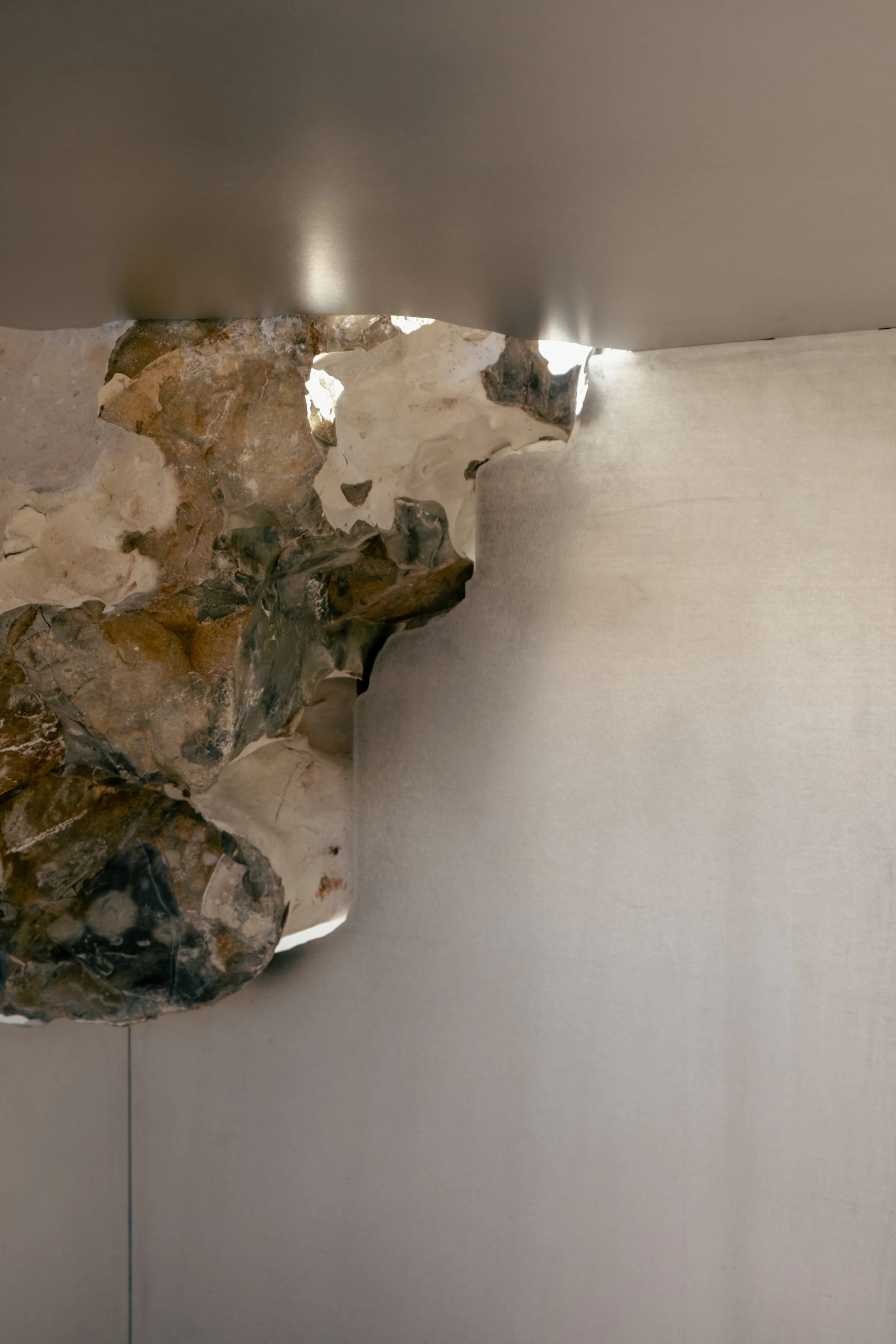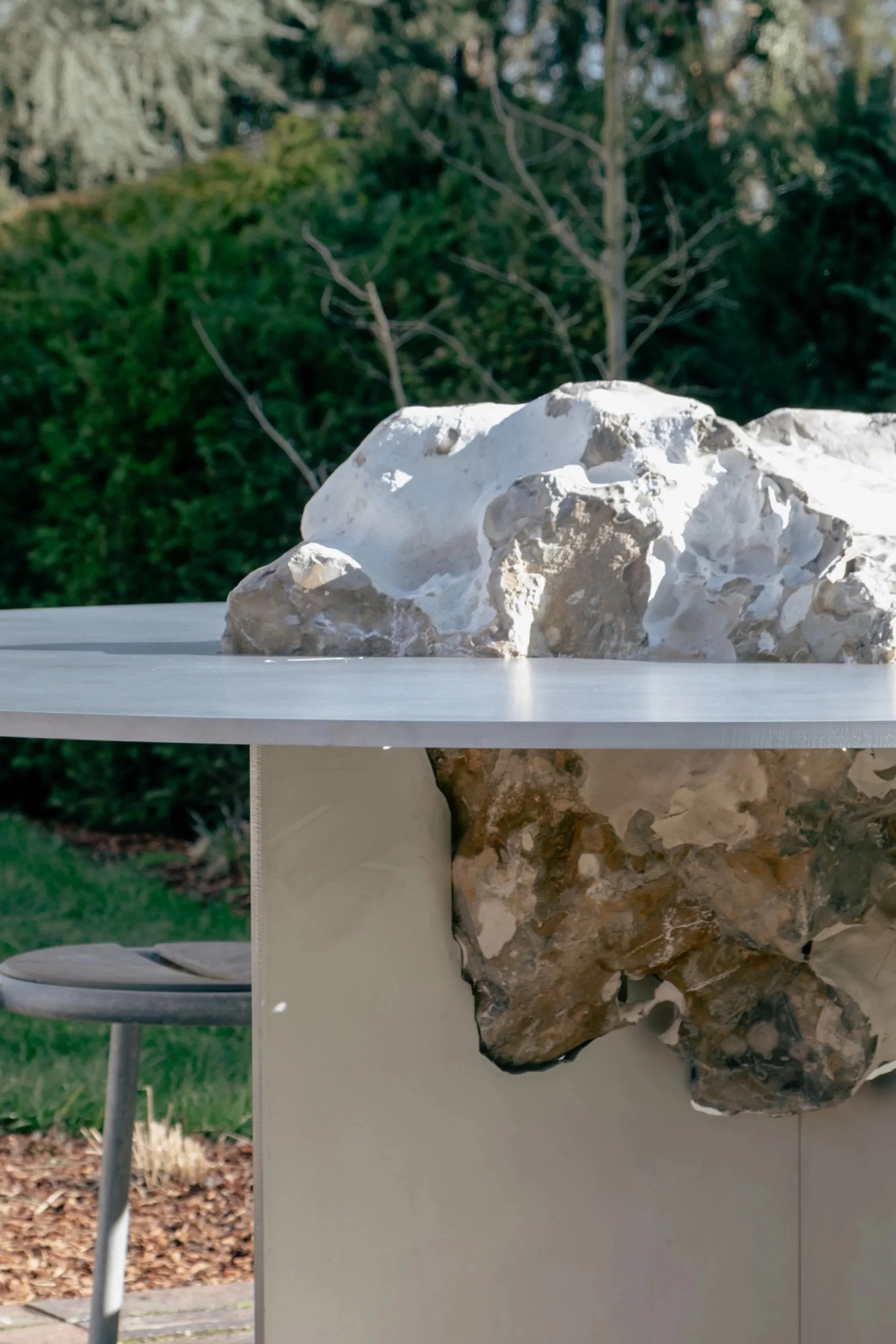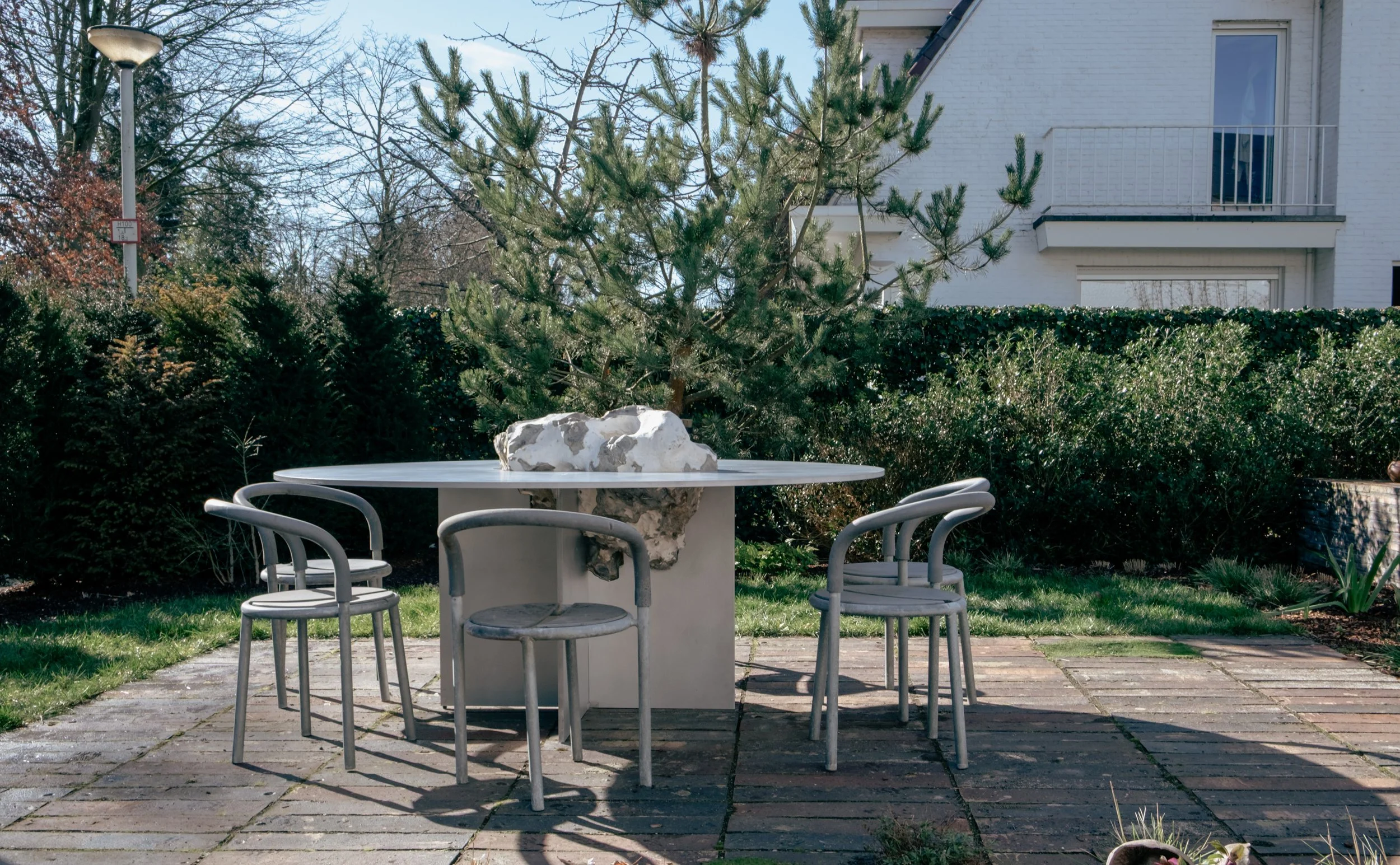
silex table
The outdoor table is placed on a rectangular surface paved with elongated clay bricks. We are in the immediate vicinity of the Boekenberg Park, which was laid out in the 17th century by Jan Willem Smeets. In addition to the English-inspired garden, he commissioned a grotto complex intended to entertain his guests, now serving as a Museum. Research in the Felix Archives of Antwerp revealed that the primary construction material was ‘silex’ or flint stone, transported from Wallonia.
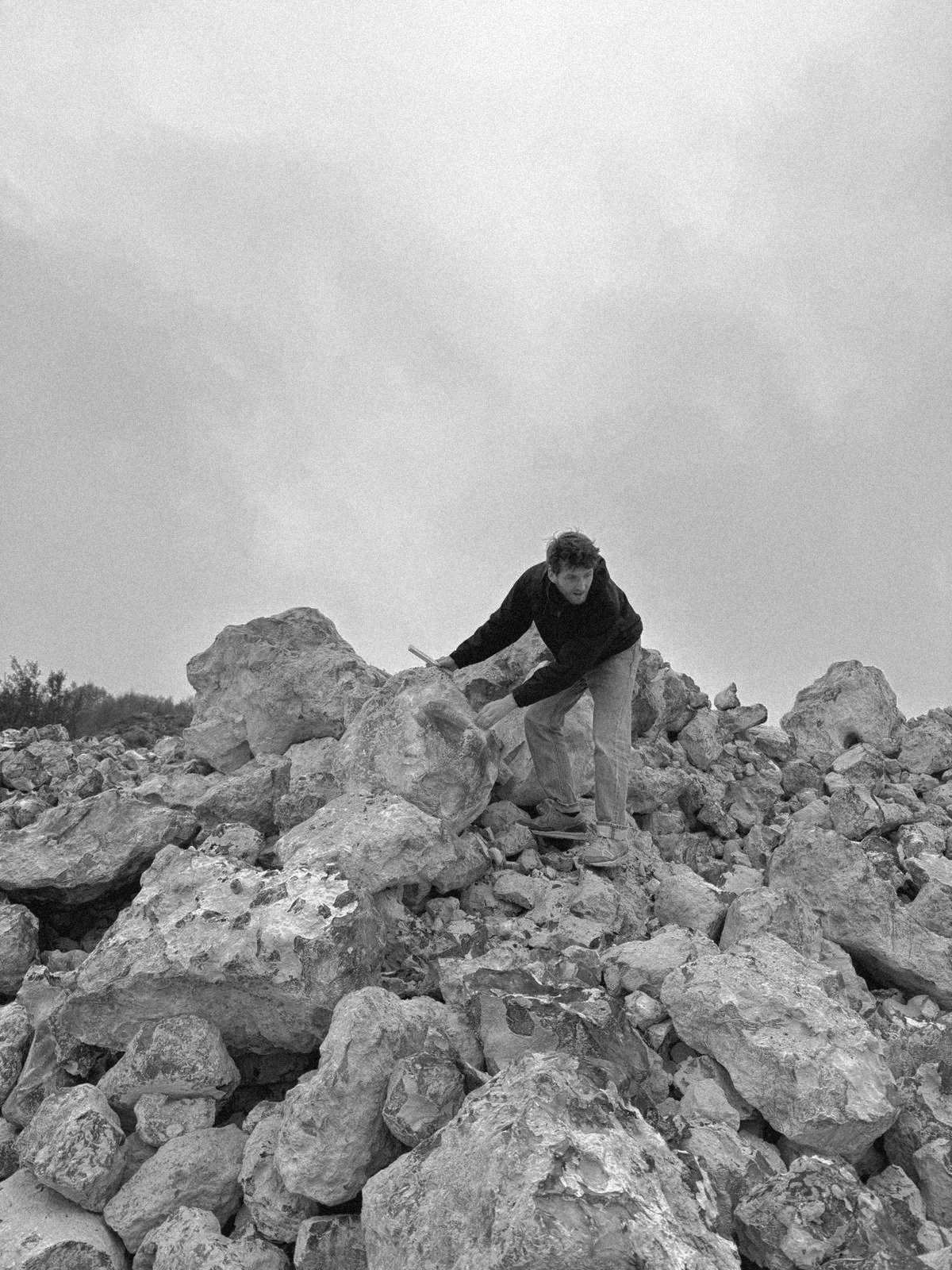
After inquiries with the non-profit Natural History Museum Boekenberg, it became clear that the guides who once knew the precise origin of the stone have since passed away. To this day, the exact quarry remains unknown. In the search for a good flint stone I contacted a staff member of the Silex Museum, housed in the Tower of Eben-Ezer in Bassenge, who obtained the contact details of the quarry manager of Carrière de Loën owned by the Heidelberg Group. Pierre-Yves kindly invited me to choose some flint rocks, which are an inferior by-product of their extraction process.
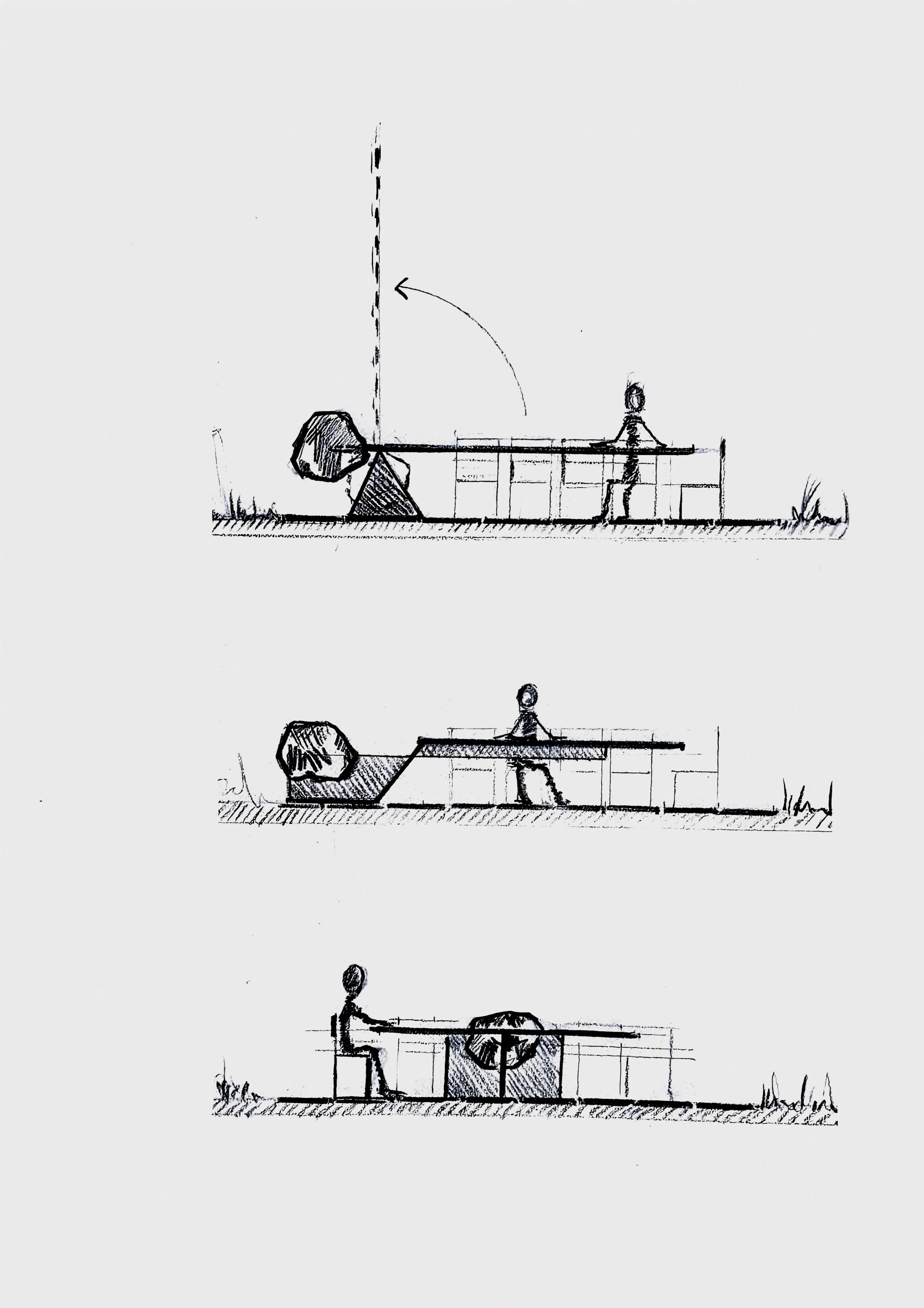
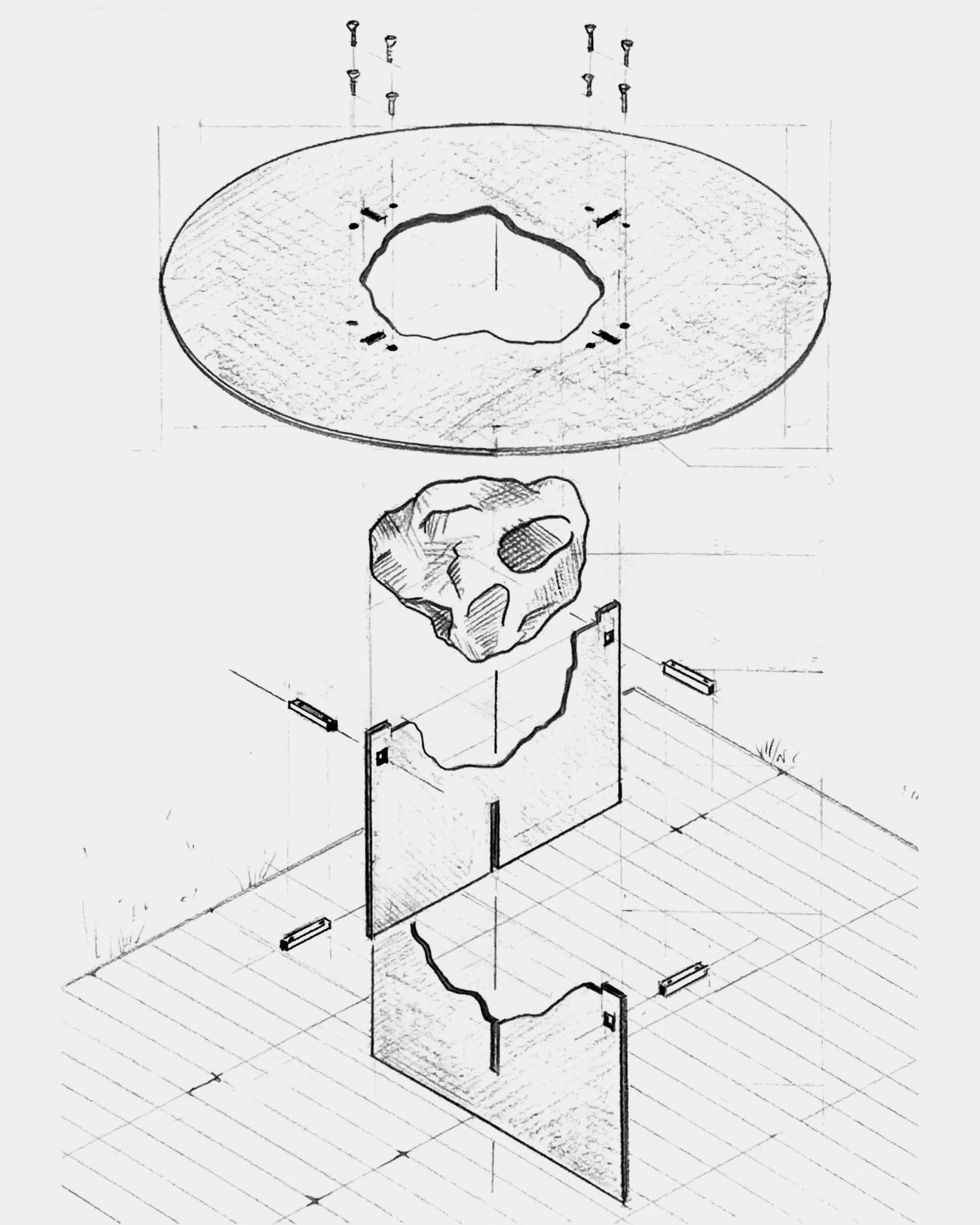
My fascination with stone, mass, and gravity led me to the conviction that this material had to become a central theme in the design of the outdoor table. Five preliminary designs were presented to the client, and the proposal in which the stone quite literally becomes the centerpiece of conversation won the pitch. Fittingly so, as I like to believe that this silex stone, together with its supporting structure, will once again - three centuries later - serve to entertain the guests of the home owner.
for Anders & Jessica
garden design by Bloesem Tuinarchitecten
pictures by Silke Van Overveld